


Light Guide
One of the keys to success with houseplants is having your them in the proper light. Too much light and your plant leaves may sunburn while too little light and your houseplants may not bloom or grow. Finding the perfect light level for each plant will help your houseplant collection thrive.
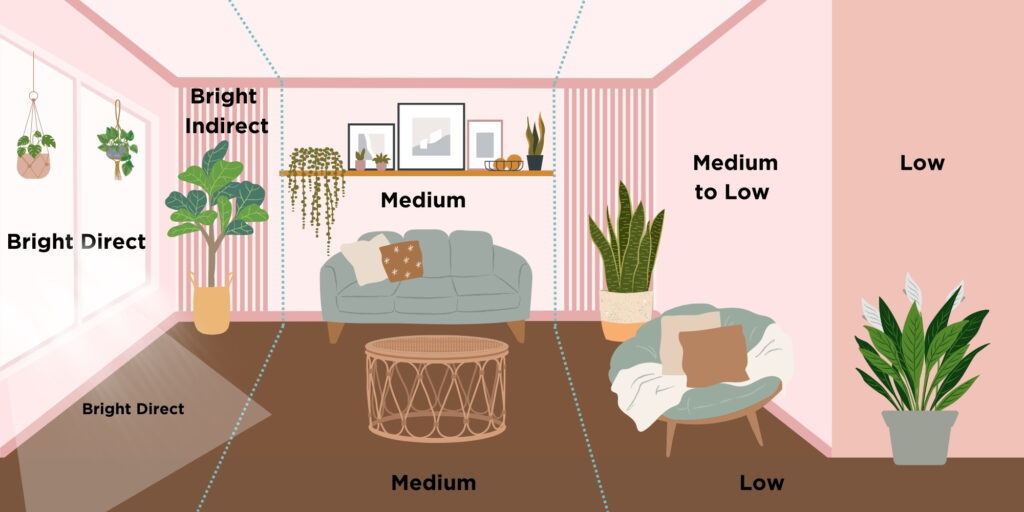
Direct vs. Indirect Sunlight
Direct sunlight is when sunlight directly shines on the plant with nothing to block or filter the light. Grow lights can be used to create direct light if your home doesn’t have enough direct light to support your houseplant collection.
Indirect sunlight is when something in the path of the sunlight filters or diffuses the light before it reaches the houseplant. Curtains, furniture, or even a tree outside your window can create indirect lighting.
Being next to a window but not in the direct line of sunlight would also be considered bright indirect lighting. There are three types of indirect sunlight that you may come across in your home.
Lighting Levels
Every houseplant requires a different amount of light to grow and thrive. Some houseplants, like ZZ plants and Snake plants, can tolerate multiple levels of light while other plants are very particular about their light levels. Becoming familiar with your houseplants and the proper level of lighting needed will help you succeed as a plant parent.
Where to Place Your Plants
The best way to determine light levels is to walk through your house at various times throughout the day and note where the light is falling.
This will help you to determine where the direct sunlight is and how many hours of direct light is available.
You can also broadly determine the light levels of your house based on the direction that the window faces. South and West-facing windows provide lots of bright direct light for high-light plants while east and north-facing windows provide indirect light that is great for medium and low-light plants.
If you are determining your light levels based on window direction make sure to take into account other factors such as furniture, curtains, and outside trees to make a better determination of the light levels.


